
Motorcycle windshield buffeting can turn an otherwise comfortable ride into an exhausting experience. Instead of feeling a steady flow of air, riders experience repeated helmet shaking, rhythmic pressure pulses, or unpredictable head movement. These disturbances often become particularly noticeable during highway riding, making it harder to relax, maintain concentration, and enjoy longer journeys.
Surprisingly, installing a larger motorcycle windshield does not always solve the problem. Some riders experience more helmet buffeting after replacing a short factory windscreen with a taller touring windshield. This happens because a windshield changes the airflow around the motorcycle, sometimes positioning the rider’s helmet directly in a region of disturbed air.
The underlying issue is aerodynamic turbulence, particularly the unsteady airflow produced around windshield edges and within the wake behind the screen. Wind-tunnel investigations have demonstrated that turbulence near the boundary of a windshield’s wake can contribute significantly to helmet noise and discomfort. [1][2]
The most effective motorcycle windshield buffeting solutions generally involve:
- Adjusting windshield height to move turbulent airflow away from the helmet.
- Changing windshield angle to redirect the outgoing airflow.
- Selecting a shorter or taller screen suited to the rider’s seated position.
- Installing a compatible adjustable windshield spoiler or extension.
- Using manufacturer-approved windshield vents or air-gap systems.
- Managing airflow around the sides of the fairing and motorcycle.
- Checking helmet aerodynamics, fit, and riding posture.
The best solution is not necessarily the largest windshield or the most expensive accessory. It is the configuration that produces comfortable airflow around the rider while maintaining adequate wind protection, visibility, and motorcycle stability.
Understanding Motorcycle Windshield Buffeting and Its Aerodynamic Causes
Motorcycle windshield buffeting results from interactions between moving air, windshield geometry, motorcycle components, and the rider’s body. As the motorcycle travels forward, air flows over and around the screen before interacting with the rider and helmet. Some of this airflow separates from the windshield and forms fluctuating structures that can produce repetitive aerodynamic forces.
Understanding how these structures develop helps explain why seemingly small windshield adjustments can produce noticeable changes in riding comfort. It also prevents riders from treating every wind-related problem as a reason to purchase a taller screen.
What Is Motorcycle Windshield Buffeting?
Motorcycle windshield buffeting is the repeated, irregular aerodynamic loading experienced by a rider when fluctuating airflow interacts with the helmet or upper body. It differs from ordinary wind resistance, which generally produces a more continuous pushing force.
Buffeting may feel like someone is repeatedly tapping the helmet, pushing the rider’s head from side to side, or creating rhythmic pressure around the ears and face.
Common symptoms include:
- Repeated helmet vibration or shaking.
- Pulsating pressure around the forehead or sides of the helmet.
- Intermittent head movement at particular riding speeds.
- Increased neck muscle effort.
- Excessive wind-related fatigue.
- Difficulty maintaining a relaxed riding posture.
A windshield can reduce direct wind pressure while simultaneously creating a turbulent wake. Consequently, improved chest protection does not guarantee improved helmet comfort.
How Helmet Buffeting Affects Riding Comfort
Helmet buffeting occurs when changing aerodynamic forces act on the helmet shell, creating fluctuating loads that can cause the rider’s head to move or vibrate.
The helmet’s aerodynamic shape influences how those forces develop, while helmet fit and the rider’s neck and posture influence the response.
A 2021 experimental study investigated aerodynamic comfort using 16 motorcycle helmets in wind-tunnel testing. The research considered wind-induced vibrations and different neck-stiffness configurations, demonstrating the importance of evaluating helmet comfort beyond simple airflow resistance. [3]
During extended riding, repeatedly counteracting helmet movement may increase perceived neck fatigue and discomfort. Pronounced buffeting can also distract a rider, although the severity varies between individuals.
Importantly, helmet movement and helmet noise are different outcomes. A helmet can be noisy without shaking substantially, or it can experience noticeable buffeting without producing unusually loud noise.
Turbulent Airflow vs. Laminar Airflow
Laminar airflow describes fluid motion in relatively orderly layers, while turbulent airflow contains irregular velocity fluctuations and rotating structures called eddies.
In aerodynamic engineering, these terms describe specific flow characteristics. They should not be confused with the everyday distinction between comfortable and uncomfortable wind.
Motorcycles operate within complex airflow environments involving the front wheel, fairing, mirrors, windshield, rider, and surrounding atmosphere. Perfectly laminar airflow around a motorcycle helmet is neither realistic nor necessary for comfortable riding.
The practical objective is to reduce the intensity of unsteady aerodynamic forces reaching the helmet.
NASA explains that airflow moving along a surface forms a boundary layer, which can separate from the surface under certain pressure conditions. This separation can substantially alter the flow behind an object. [4]
For motorcycle windscreens, controlling where airflow separates and travels is often more important than attempting to eliminate all turbulence.
Understanding the Helmet Turbulence Zone
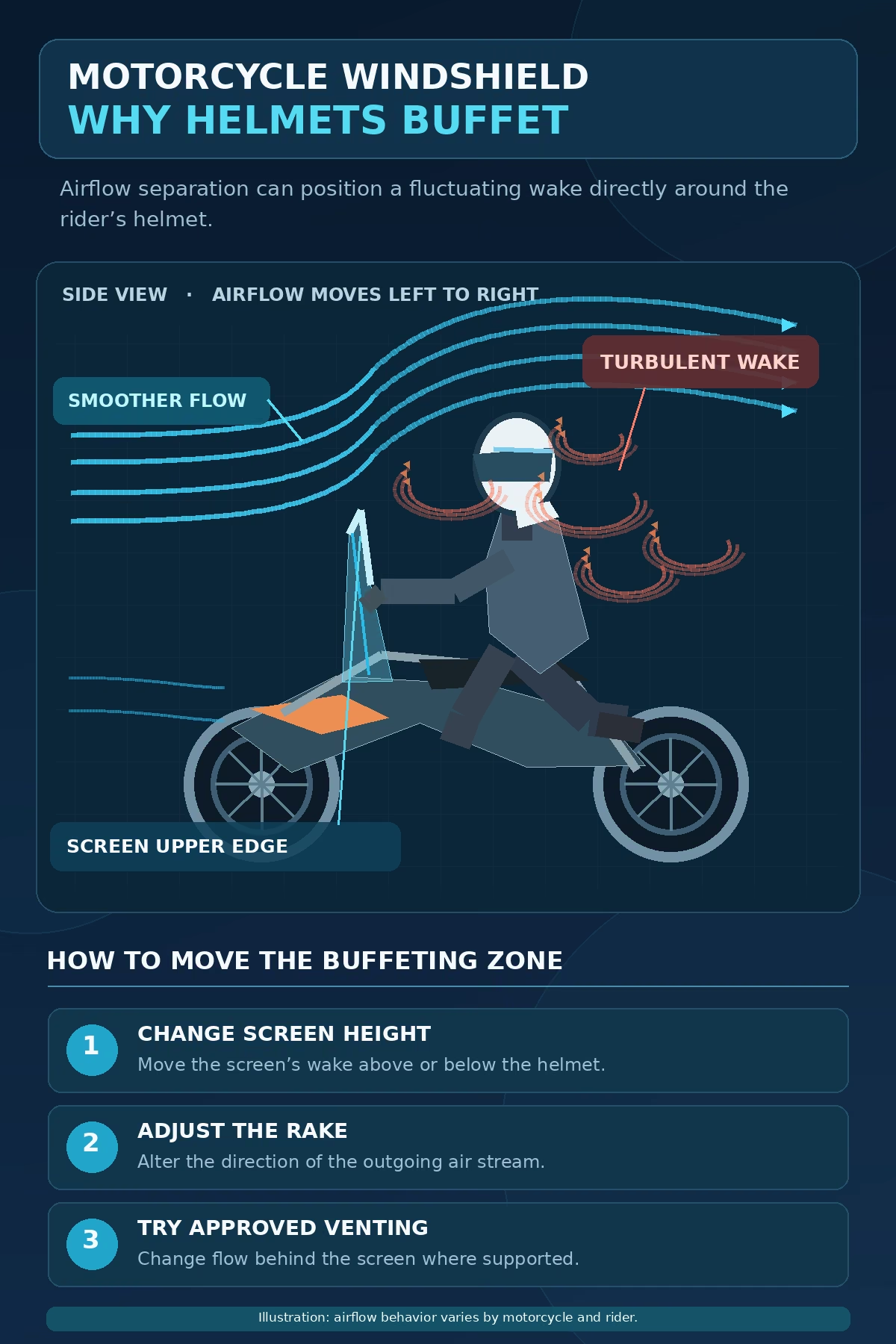
The helmet turbulence zone is a region of disturbed airflow that can form behind or above a motorcycle windshield.
Air passing over the windshield’s upper edge interacts with surrounding airflow, producing a wake boundary where velocity fluctuations may be relatively strong.
Wind-tunnel investigations by ISVR Consulting identified substantial turbulence near the edge of a motorcycle windshield’s wake. Researchers also found that the height of this region depended on windshield height. [2]
A rider’s helmet may occupy one of three general airflow conditions:
| Helmet position | Typical airflow exposure | Possible riding experience |
|---|---|---|
| Above the main windshield wake | More direct incoming airflow | Steady wind pressure with potentially less screen-induced buffeting |
| Within the wake boundary | Stronger velocity fluctuations | Helmet shaking, pressure pulses, or increased noise |
| Inside a well-sheltered region | Reduced direct airflow | Less wind pressure, although recirculation may still cause discomfort |
These zones are not fixed horizontal layers. Their position and intensity depend on screen design, speed, rider posture, and surrounding wind conditions.
Moving the strongest wake fluctuations above or below the helmet can therefore reduce buffeting.
How Windshield Edge Turbulence and Vortex Shedding Develop
Windshield edge turbulence develops when airflow changes direction and separates around a windshield’s upper or side edges.
As the separated flow interacts with surrounding air, it forms shear layers and rotating flow structures. Under appropriate conditions, vortices may develop and detach from the separated region, a process known as vortex shedding.
These structures can create fluctuating aerodynamic forces when they interact with a motorcycle helmet.
Windshield width, edge curvature, upper-edge contour, and mounting angle influence the way airflow separates.
A narrow screen may allow more airflow around its side edges, while a wider windshield may redirect more air toward the shoulders or helmet from different directions.
However, wider screens are not automatically more turbulent, and vortex shedding does not necessarily produce a single, regular shaking frequency.
The actual result depends on the complete motorcycle and rider configuration.
The Aerodynamic Wake and Low-Pressure Zone Behind a Windshield
An aerodynamic wake is the region of altered airflow that develops downstream of an object moving through air.
Behind a motorcycle windshield, the wake often contains reduced average airflow speed, recirculation, and fluctuating pressure.
The windshield generally experiences different pressure distributions on its front and rear surfaces. As air passes around its edges, surrounding flow interacts with the region behind the screen.
This can produce a relatively low-pressure area in parts of the wake, although it is not a vacuum and its pressure is not uniform.
The interaction between the rear-side pressure field and separated airflow influences the environment around the rider.
A manufacturer-designed vent or appropriately spaced windshield may allow additional airflow behind the screen, changing the pressure distribution and wake structure.
These modifications can improve comfort on some motorcycles, but their effectiveness depends on screen geometry and airflow conditions.
Why Aerodynamic Pressure Fluctuation Causes Helmet Shaking
Aerodynamic pressure fluctuation refers to changes in air pressure over time at a particular location.
When pressure and airflow velocity vary around different portions of a helmet, the resulting aerodynamic forces can also vary. These changing forces may create head movement, rotational loading, or vibration.
The strength and frequency content of the fluctuations influence how noticeable the disturbance becomes.
For example, a rider may experience a steady backward aerodynamic force without significant buffeting. Another rider may experience lower average wind pressure but stronger fluctuations that repeatedly disturb the helmet.
It is also important to distinguish helmet buffeting from physical windshield vibration.
A windshield that oscillates because of flexible brackets or loose fasteners presents a different mechanical issue, even though aerodynamic loading may contribute to that movement.
Both problems can occur simultaneously and require separate investigation.
Diagnosing the Main Causes of Motorcycle Windshield Buffeting
Effective troubleshooting begins by identifying where the disturbance originates. A windshield may produce unwanted airflow near the helmet, but other variables can alter the same symptoms, including seat height, helmet design, crosswinds, and mounting hardware.
A systematic diagnosis prevents unnecessary replacement parts and helps determine whether the problem is aerodynamic, mechanical, or environmental.
The most useful observations are when buffeting occurs, where the rider feels it, and whether small changes in normal seated position alter the sensation.
How Rider Height and Seating Position Influence Wind Exposure
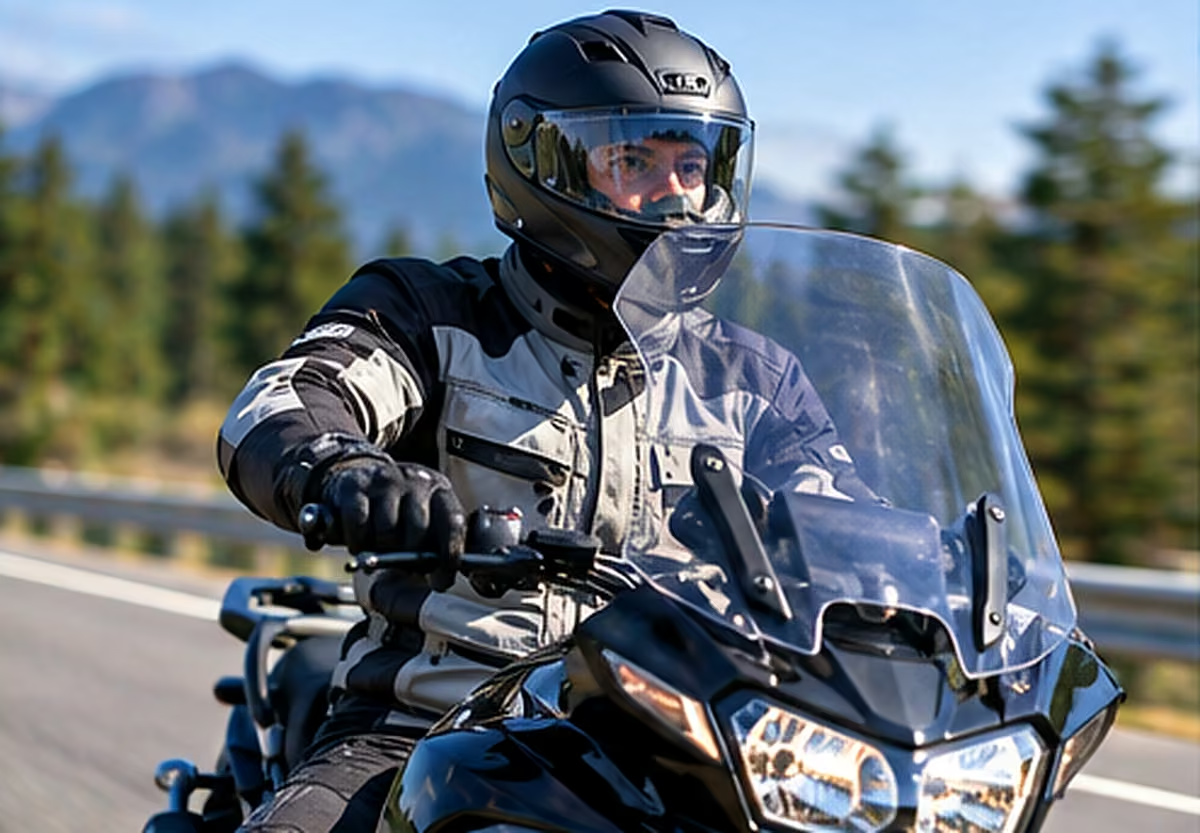
Rider height and seating position strongly influence the relationship between the helmet and the windshield’s turbulent wake.
Two riders with the same overall height may have different torso lengths. Consequently, their helmets may occupy different positions relative to the windshield when seated on the same motorcycle.
Important variables include:
- Seated torso height.
- Saddle thickness and height.
- Riding posture.
- Handlebar position.
- Helmet dimensions.
- Passenger or luggage loading that changes suspension sag.
A taller rider may sit directly in the wake boundary created by a windshield that comfortably protects a shorter rider.
Similarly, installing a taller seat can raise the helmet into a different airflow region.
Before purchasing accessories, sit on the motorcycle in normal riding gear and evaluate the windshield’s upper edge relative to your natural eye level.
Avoid assuming that a windshield suitable for someone of similar standing height will provide identical results.
Why Windshield-to-Rider Distance Matters
Windshield-to-rider distance describes the horizontal separation between the windshield and the rider, particularly the helmet and upper body.
Separated airflow develops downstream of the windshield. Therefore, moving the helmet farther from or closer to the screen may change the airflow encountered.
Adventure motorcycles and upright touring motorcycles often position the rider relatively far behind the windshield. Sport-touring machines may place the rider closer to the fairing, particularly in a forward-leaning posture.
These geometries can produce noticeably different results even when windshield heights appear similar.
Changing handlebar position or seat location can also alter the rider’s exposure.
However, adjusting ergonomic components solely to reduce buffeting should not compromise steering control, reach, or comfortable riding posture.
Windshield distance is best treated as one variable within the overall aerodynamic system rather than an independent measurement that determines comfort.
Understanding Speed-Dependent Buffeting
Speed-dependent buffeting is airflow-related disturbance that becomes noticeable or changes intensity within particular motorcycle speed ranges.
Aerodynamic forces generally increase as relative airflow speed increases.
The basic relationship is expressed through dynamic pressure:
q = ½ρV²
Where:
- q is dynamic pressure.
- ρ is air density.
- V is relative airflow speed.
For otherwise unchanged conditions, doubling airflow speed increases dynamic pressure by a factor of four. NASA explains this relationship in its aerodynamic guidance. [5]
However, buffeting severity does not necessarily increase smoothly with speed because wake structures, helmet response, and local pressure fluctuations may change.
A rider might notice strong helmet shaking during moderate highway speeds but different symptoms at other speeds.
Record the speed range where symptoms occur without deliberately exceeding legal limits or riding at an uncomfortable speed.
The goal is to identify a repeatable pattern, not to determine the maximum speed at which buffeting occurs.
How Crosswind Buffeting Changes Motorcycle Airflow
Crosswind buffeting occurs when wind approaching from the side changes the airflow and aerodynamic loading around the motorcycle.
Crosswinds alter the effective direction of incoming air relative to the motorcycle, which aerodynamic engineers describe using the yaw angle.
Research published in 2015 examined motorcycle aerodynamics under crosswind conditions and found that changing yaw angles influenced aerodynamic forces and vortex structures around the motorcycle, windshield, and helmet. [6]
A separate 2026 wind-tunnel investigation also reported significant changes in motorcycle aerodynamic coefficients with wind direction. [7]
In everyday riding, crosswinds can arise from weather conditions, exposed roads, bridges, and turbulence near large vehicles.
A windshield configuration that feels comfortable on a calm road may behave differently during gusts.
If buffeting occurs only under particular wind conditions, changing the windshield may not completely eliminate it.
Persistent symptoms under calm conditions are more useful for diagnosing windshield geometry.
Windshield Vibration vs. Helmet Buffeting
Windshield vibration describes physical movement of the screen or its mounting components, while helmet buffeting describes the aerodynamic forces acting on the rider’s helmet.
The symptoms may appear similar, but their causes and remedies can differ.
Mechanical windshield vibration may result from:
- Loose or incorrectly tightened fasteners.
- Cracked mounting brackets.
- Worn rubber mounting components.
- Excessively flexible supports.
- Damaged windshield attachment points.
- Incorrectly installed aftermarket accessories.
If the screen visibly shakes, inspect its mounting system while the motorcycle is stationary.
Never attempt to stabilize a moving windshield by touching it while riding.
A securely mounted windshield may still produce helmet buffeting because the underlying airflow remains disturbed.
Mechanical faults should always be corrected before further aerodynamic adjustments, since a loose screen can create a safety hazard.
Why Passengers Experience Wind Buffeting
Passenger wind buffeting results from airflow interacting with the rider, windshield, and passenger as a combined aerodynamic system.
The passenger often sits higher or farther behind the windshield, placing their helmet in a different airflow region.
Air passing around the rider’s shoulders and helmet can also influence the flow reaching the passenger.
The Motorcycle Safety Foundation has highlighted that a windshield may move turbulence away from the rider while shifting it toward the passenger. [8]
This explains why a taller screen can improve the front rider’s comfort without necessarily helping the pillion.
Passenger height, seating position, helmet design, and the motorcycle’s rear-body geometry all contribute.
When evaluating touring windshield modifications, obtain feedback from both occupants.
A configuration should ideally improve the overall riding experience rather than transferring the disturbance from one person to another.

Adjusting Windshield Height, Angle, and Shape to Reduce Buffeting
Windshield adjustments are usually the most practical starting point because they can change the airflow trajectory without requiring a complete replacement.
Height, angle, and screen profile determine how incoming air is redirected around the rider.
The correct configuration depends on helmet position, riding posture, and motorcycle geometry.
Adjust one variable at a time, use only manufacturer-supported settings, and evaluate the results under comparable conditions before deciding whether additional equipment is necessary.
Windshield Height Adjustment: Finding the Best Screen Position
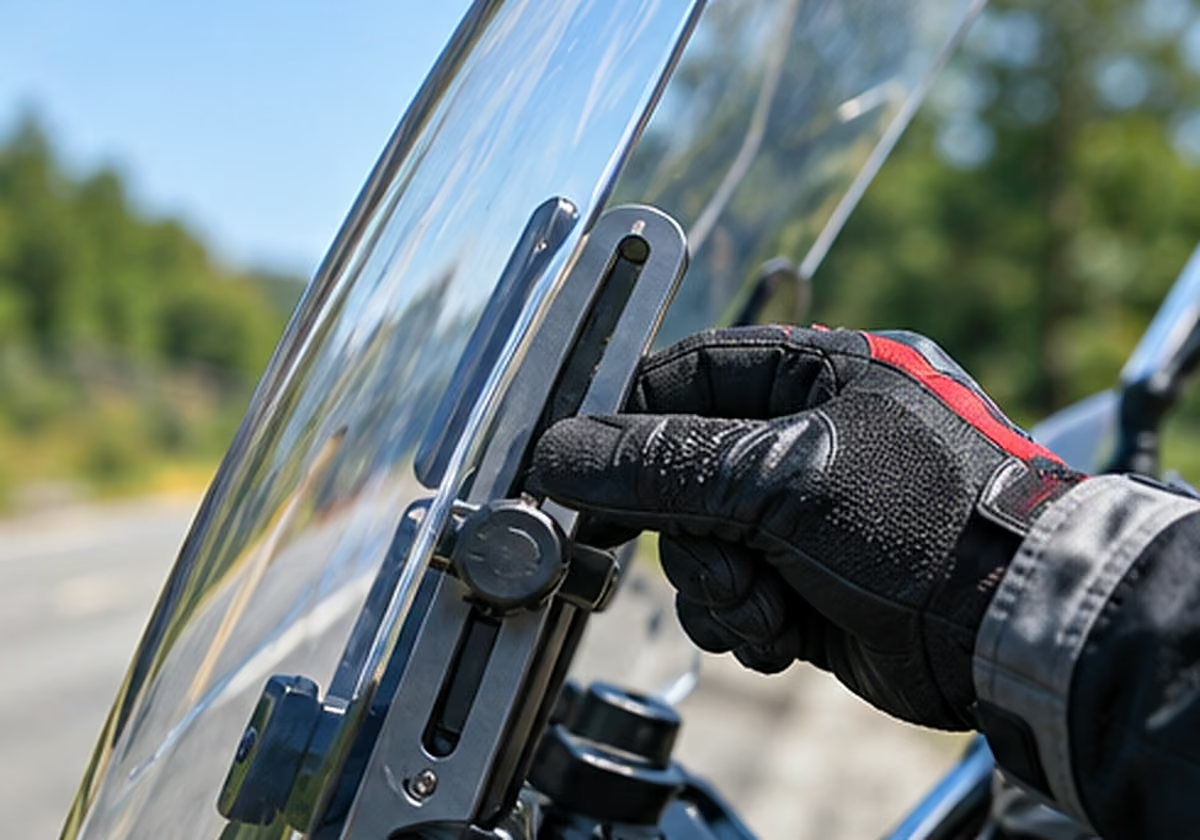
Windshield height adjustment changes the position of the screen’s upper edge and the airflow leaving it.
Raising the screen may redirect more air above the helmet, while lowering it may position the helmet in more direct incoming airflow.
Both approaches can improve comfort, depending on the original turbulence pattern.
A practical adjustment procedure is:
- Position the motorcycle safely on level ground.
- Sit in the normal riding position with your usual helmet.
- Record the existing windshield height.
- Move the windshield by one manufacturer-approved adjustment increment.
- Secure the adjustment mechanism.
- Test the configuration under appropriate riding conditions.
- Record helmet stability, wind pressure, and noise separately.
- Repeat using another approved setting if necessary.
Maintain safe forward visibility throughout testing.
National Cycle recommends sizing many conventional touring windshields so riders can look just over the upper edge toward the road approximately 50 feet ahead. This is a fitment guideline, not a universal aerodynamic requirement. [9]
Signs Your Motorcycle Windshield Is Too Short
A windshield may be functionally too short if it allows more direct wind pressure onto the rider’s chest, shoulders, and helmet than desired.
The rider may experience considerable upper-body exposure during sustained highway travel, particularly in cold or rainy conditions.
However, a short windshield does not automatically produce stronger helmet buffeting.
If its upper-edge wake passes below the helmet, the rider may experience relatively steady incoming wind.
Warning signs that justify testing a taller configuration include excessive chest pressure, fatigue from sustained wind exposure, and a turbulent stream striking the lower helmet.
The correct comparison is between overall comfort and aerodynamic disturbance, not simply the amount of air reaching the rider.
Signs Your Motorcycle Windshield Is Too Tall
A windshield may be unsuitable because of excessive height even when it provides substantial protection from direct wind.
The most obvious warning signs involve visibility. A tall screen may require the rider to look through a surface affected by rain, dirt, scratches, glare, or optical distortion.
Some tall screens may also create uncomfortable recirculation or airflow patterns around the rider.
However, a tall windshield is not inherently more turbulent than a short one.
A properly configured tall touring screen may provide very comfortable airflow, while another screen of similar height may position disturbed air around the helmet.
Consider lowering the windshield or testing a different profile when visibility or aerodynamic comfort is poor.
Windshield Angle Adjustment: How Rake Changes Airflow
Windshield angle adjustment changes the windshield’s rake, meaning its inclination relative to the motorcycle.
A more upright screen and a more reclined screen influence airflow differently because they alter how incoming air follows or separates from the surface.
Changing rake can affect the outgoing airflow direction, wake size, and pressure distribution behind the windshield.
Some adjustable systems allow riders to change height and angle independently.
For example, MadStad RoboBracket instructions describe controlled adjustments to windshield height and tilt, including small angle changes between tests. The instructions explicitly require the motorcycle to be stopped before adjustments are made. [10]
There is no universally optimal rake angle for every motorcycle.
When experimenting, keep screen height unchanged while testing permitted angle settings. Otherwise, it becomes difficult to determine which adjustment produced the improvement.
Choosing the Right Windshield Shape and Width
Windshield shape and width influence where air travels around the motorcycle and how much of the rider’s body receives direct airflow.
A narrow screen may reduce frontal coverage but allow relatively unrestricted airflow around its sides.
A wider screen can improve shoulder and torso protection, although it may also redirect more air around the fairing and toward other parts of the rider.
Upper-edge curvature, side contours, screen thickness, and mounting position all influence aerodynamic behavior.
A rounded or shaped edge may produce different separation characteristics from a straight-edged screen, but its effectiveness depends on the complete design.
Windshield selection should therefore consider:
- Seated rider height.
- Desired chest and shoulder protection.
- Helmet position.
- Screen edge profile.
- Visibility.
- Motorcycle-specific fitment.
- Compatible mounting hardware.
A screen should be evaluated as part of the motorcycle’s aerodynamic system rather than by width or height alone.
Can a Short Windshield Solution Reduce Helmet Buffeting?
The short windshield solution involves using a lower screen so the helmet sits above much of the strongest windshield-generated wake.
Instead of trying to shelter the entire helmet, this configuration allows more direct incoming airflow to reach it.
For some riders, the resulting continuous wind pressure feels more comfortable than repeated turbulent pulses.
This approach can be particularly appealing when a medium-height windshield directs its wake boundary directly at the helmet.
The tradeoff is reduced protection from wind, cold, rain, and airborne debris.
Shorter screens may also increase upper-body loading during sustained highway travel.
A short windshield is therefore not automatically superior. It should be considered when the rider prioritizes helmet stability and can tolerate the additional direct airflow.
When a Tall Touring Windshield Is the Better Choice
A tall touring windshield is designed to provide substantial wind and weather protection by redirecting airflow around or above the rider.
For long-distance touring, reduced chest pressure and protection from cold air can contribute significantly to comfort.
A properly matched tall screen may also reduce direct airflow around the helmet.
However, its effectiveness depends on seated rider height, screen geometry, and the distance between the windshield and helmet.
Visibility deserves particular attention.
Looking through a windshield can become problematic when the surface is wet, dirty, scratched, or optically distorted.
National Cycle’s sizing guidance emphasizes maintaining the ability to see over the screen in a normal riding position. [9]
Riders should balance aerodynamic comfort with a reliable view of the road and follow the visibility requirements applicable to their motorcycle.

How a Recurve Windshield Redirects Air
A recurve windshield features an upper section that curves upward more sharply than the main windshield surface.
This upward curvature is intended to change the trajectory of airflow leaving the screen.
In some configurations, a recurve profile can send airflow higher without requiring an equally large increase in windshield height.
The effectiveness depends on the recurve geometry, windshield position, and rider location.
Klock Werks, for example, uses an upward-curving upper section in its Flare windshield design. The manufacturer describes the feature as redirecting airflow upward and rearward. [11]
Such design descriptions explain the intended aerodynamic function, but they do not establish that every recurve screen will eliminate buffeting on every motorcycle.
Evaluate visibility, fitment, screen rigidity, and independent rider-specific results before selecting a recurve windshield.
Adjustable Windshield Brackets and Their Benefits
Adjustable windshield brackets allow riders to change windshield positioning without replacing the complete screen.
Depending on the design, adjustments may include height, rake, and the distance between the screen and motorcycle fairing.
Systems such as the MadStad RoboBracket provide an example of how adjustable mounting hardware can support aerodynamic experimentation.
Their main advantage is flexibility.
A rider may find that a small positional adjustment produces greater improvement than purchasing an entirely different windshield.
However, bracket rigidity and installation quality remain critical.
Inspect attachment points, adjustment mechanisms, and any rubber mounting components for damage or looseness.
Before riding, confirm that all controls move freely through their full operating range.
Only use brackets approved for the motorcycle and windshield combination. Unsupported modifications can increase vibration, reduce mounting security, or create interference with steering components.
Managing Air Pressure With Vented Windshields and Air Gaps
Windshield airflow is influenced not only by air passing over the screen but also by air entering the region behind it.
Vents and designed air gaps can modify rear-side pressure and wake behavior.
These features sometimes reduce uncomfortable flow fluctuations without requiring a much taller windshield.
However, pressure management is geometry-dependent. An opening that improves one motorcycle’s airflow may have little benefit on another, and an unplanned modification can introduce new problems.
How a Vented Windshield Changes Airflow
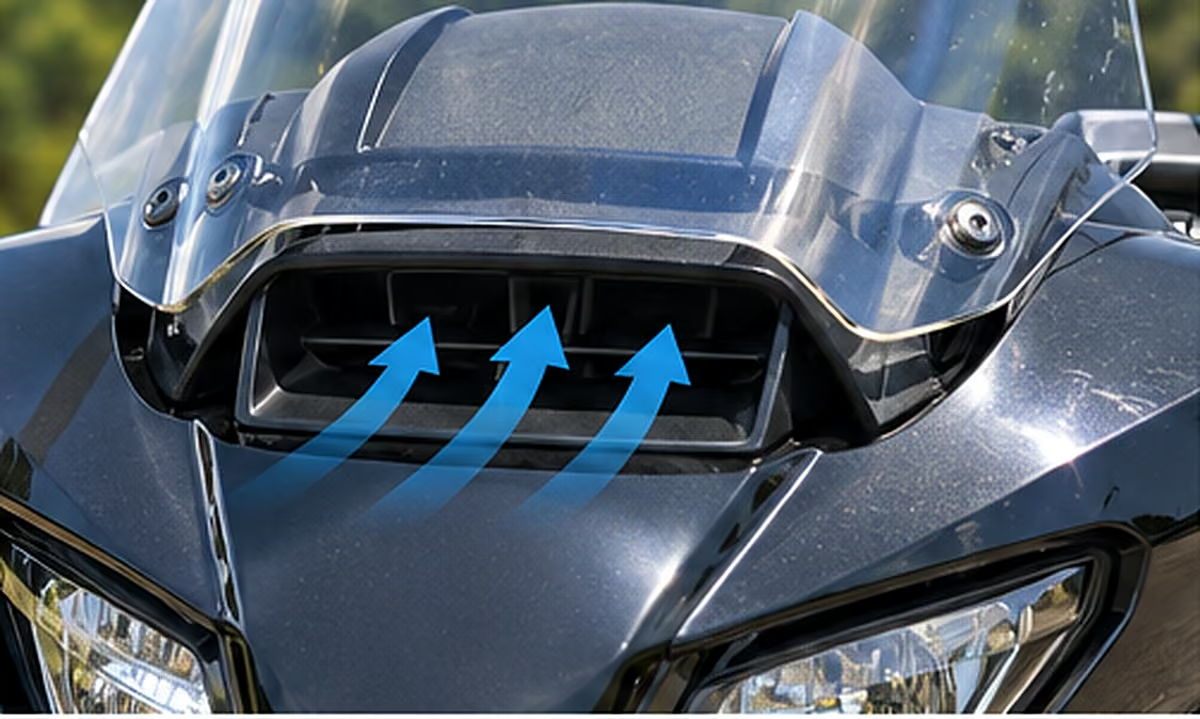
A vented windshield incorporates an opening that allows airflow to pass through the windshield or associated fairing structure.
The additional flow may influence the pressure distribution behind the screen and reduce certain forms of recirculation.
Different designs use fixed openings, adjustable vent doors, or integrated fairing ducts.
Harley-Davidson provides a documented example through its Splitstream fairing vent system.
Its owner guidance explains that the vent can improve airflow comfort and reduce wind buffeting. For applicable frame-mounted fairings, Harley-Davidson identifies the open vent position as preferable for reducing turbulence. [12]
This is motorcycle-specific guidance rather than a universal rule that every windshield vent must remain open.
The vent’s position, opening area, and surrounding fairing shape influence its effectiveness.
Avoid drilling or cutting a windshield merely to create an improvised vent unless the manufacturer explicitly supports the modification.
Windshield Air Gap: Why Airflow Behind the Screen Matters
A windshield air gap is an opening or spacing arrangement that permits airflow between the windshield and the motorcycle’s front structure.
It may be created by a specifically designed mounting system or by the geometry of a multi-piece windshield.
Air entering through the gap can interact with the rear surface of the main screen and the airflow leaving its upper edge.
Depending on the design, this may alter pressure differences and reduce some wake fluctuations.
However, simply increasing the gap does not guarantee smoother airflow.
An excessively large or poorly positioned opening may direct unwanted air toward the rider.
It may also compromise mounting security if created using unsupported spacers.
The safest approach is to use motorcycle-specific systems designed to maintain appropriate airflow passages while preserving structural rigidity.
Comparing Windshield Venting and Air Gap Modifications
Windshield vents and air-gap systems both introduce additional airflow behind a screen, but their geometry and aerodynamic effects are different.
A vent allows airflow through a defined opening, while an air gap usually allows airflow around or beneath part of the windshield assembly.
| Feature | Vented windshield | Windshield air gap |
|---|---|---|
| Airflow entry | Through a designated opening | Between screen and mounting structure |
| Typical construction | Fixed or adjustable vent | Spaced or multi-piece arrangement |
| Main design objective | Modify local airflow and rear pressure | Alter flow interaction behind the screen |
| Adjustability | Depends on vent design | Depends on mounting system |
| Main limitation | Limited by opening geometry | Limited by spacing and structural design |
Neither method should be considered universally superior.
Choose based on the motorcycle’s existing airflow characteristics and the availability of manufacturer-approved components.
Compare helmet stability, chest pressure, and overall comfort before deciding whether the change is worthwhile.
Aftermarket Motorcycle Windshield Buffeting Solutions
Aftermarket accessories offer additional ways to modify airflow when factory windshield adjustments are insufficient.
Common options include upper spoilers, clip-on extensions, dual-blade windscreens, side winglets, and lower wind deflectors.
The most suitable accessory depends on where the disturbance originates.
A spoiler designed to redirect upper-edge airflow may not address turbulence rising from the lower fairing, while a fork-mounted deflector may have limited effect on an upper-edge wake problem.
Windshield Spoiler: How an Upper Deflector Helps
A windshield spoiler is a secondary aerodynamic surface attached near the upper portion of a motorcycle windshield.
It changes the outgoing airflow path and may increase the effective wind-deflection height.
Some spoilers also create a controlled gap between the main windshield and the upper blade.
Adjustable systems permit changes to the spoiler’s height, angle, or separation from the main screen.
Examples include MRA X-Creen systems and Puig’s adjustable visor products.
These designs offer different mechanisms and fitment requirements, so they should not be treated as interchangeable. [13][14]
A spoiler may help when the main windshield directs disturbed airflow toward the helmet.
However, an incorrectly positioned spoiler can introduce additional turbulence or vibration.
Use only approved mounting systems and begin testing from the manufacturer’s recommended configuration.
Clip-On Windshield Extension vs. Full Windshield Replacement
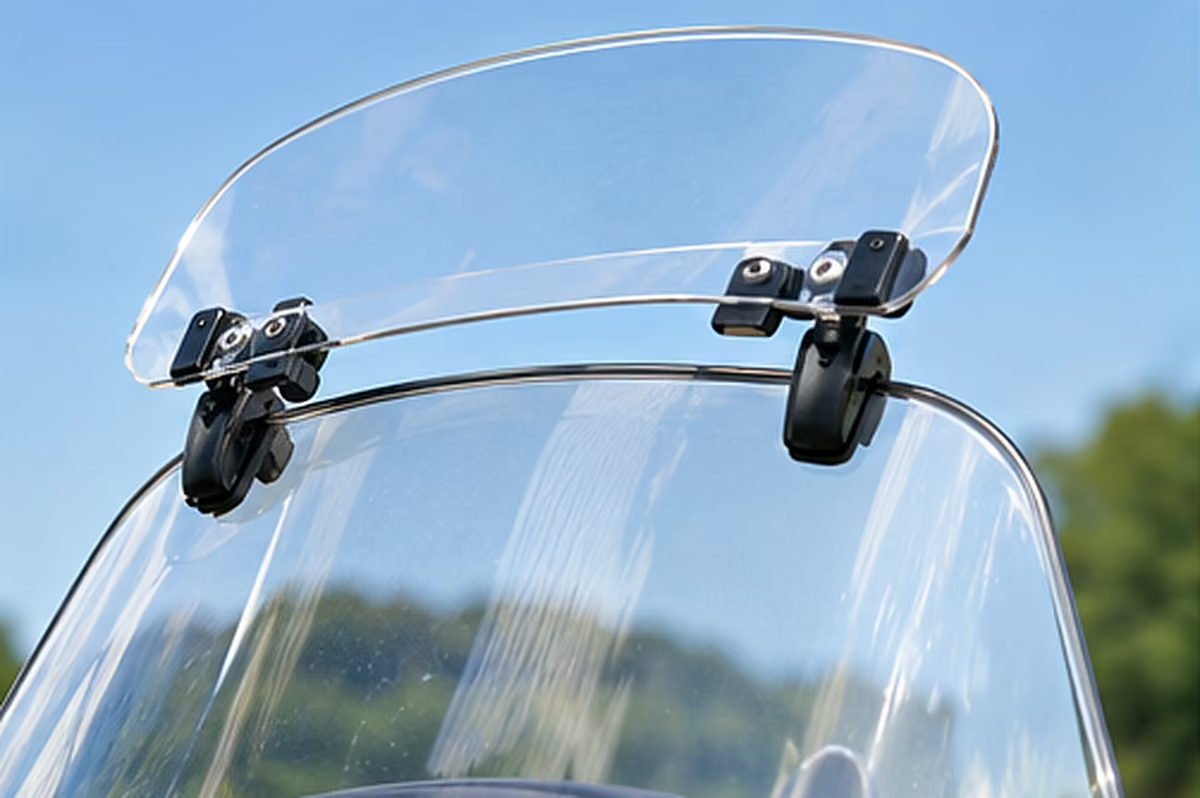
A clip-on windshield extension attaches to an existing windshield using compatible clamping hardware.
Its main advantage is that it may provide additional effective wind protection without replacing the original screen.
A full windshield replacement changes the entire screen’s height, width, curvature, and potentially its mounting characteristics.
| Consideration | Clip-on extension | Full windshield replacement |
|---|---|---|
| Installation | Often relatively simple | May require removal of the existing screen |
| Adjustability | Available on many models | Depends on windshield and mounting design |
| Reversibility | Often removable | Reversible if the original screen is retained |
| Aerodynamic changes | Primarily upper-edge airflow | Entire windshield airflow pattern |
| Mounting concerns | Clamp compatibility and added loading | Screen fitment and mounting integrity |
| Visibility | Additional blade and hardware may enter the view | Depends on replacement screen size |
Puig offers a clip-on multi-adjustable visor designed for compatible original and aftermarket windscreens. The manufacturer emphasizes checking compatibility before installation. [13]
A clip-on extension can be a useful first experiment when the existing screen is otherwise satisfactory.
How a Dual-Blade Windshield System Works
A dual-blade windshield system uses two aerodynamic surfaces instead of a single fixed panel.
The primary windshield provides much of the original wind protection, while a secondary blade modifies the airflow leaving the assembly.
Some systems include a gap between the blade sections.
Others allow the upper blade to slide or change position.
The GIVI AIRFLOW system is an example of this approach.
GIVI describes its design as an adjustable, sliding windshield arrangement that allows riders to modify wind coverage according to their height. [15]
The aerodynamic result depends on the relative position of both blades and their interaction with the incoming flow.
Dual-blade designs may provide useful flexibility for riders whose preferred airflow changes with loading, posture, or riding conditions.
Nevertheless, they do not guarantee turbulence-free operation, and their moving components require proper maintenance.
Using Windshield Side Winglets to Reduce Lateral Turbulence
Windshield side winglets are additional panels intended to influence air moving around the sides of the windshield or fairing.
They may redirect airflow away from the rider’s shoulders, upper torso, or helmet.
These accessories are most relevant when the rider experiences noticeable airflow arriving from the sides rather than primarily from the windshield’s upper edge.
For example, a touring motorcycle with exposed fairing gaps may produce different lateral airflow patterns from a fully enclosed touring fairing.
Manufacturer-designed side deflectors provide an established approach to managing these conditions.
Harley-Davidson’s owner instructions describe adjustable fairing deflectors that can be positioned to influence rider and passenger comfort and minimize buffeting. [16]
However, side winglets cannot be expected to solve every helmet turbulence problem.
Their effectiveness should be evaluated through controlled riding comparisons.
Fork-Mounted Wind Deflectors for Lower Airflow Management
Fork-mounted wind deflectors are aerodynamic panels attached near the motorcycle’s front fork or associated mounting structure.
They are intended to redirect airflow around the lower front portion of the motorcycle.
On some motorcycles, air passing around the forks, fuel tank, and lower fairing may travel upward toward the rider.
If this airflow interacts with the upper-body wake, lower deflectors may alter the resulting disturbance.
However, direct evidence that fork deflectors reliably eliminate helmet buffeting across different motorcycle designs is limited.
Their benefit should be treated as motorcycle-specific rather than guaranteed.
Fork-mounted accessories also require careful installation because they operate near steering and suspension components.
Check clearance during full handlebar movement and suspension travel, and ensure that the accessory cannot contact brake hoses, cables, or moving components.
Motorcycle and Helmet Design Factors That Affect Windshield Buffeting
A windshield does not operate independently from the rest of the motorcycle.
Fairing geometry, steering configuration, rider ergonomics, helmet shape, and protective equipment all influence aerodynamic comfort.
Two motorcycles using similarly sized screens can produce substantially different airflow around the rider.
Likewise, a helmet that feels stable on one motorcycle may behave differently on another because the incoming airflow reaches it from a different direction.
Fairing-Mounted Windshield vs. Other Windshield Mounting Designs
A fairing-mounted windshield attaches to a motorcycle’s aerodynamic bodywork rather than directly to a simple handlebar-mounted support.
However, motorcycle fairings themselves may be mounted to the frame or front fork assembly.
A frame-mounted fairing remains stationary relative to the motorcycle’s main frame during steering, while a fork-mounted fairing turns with the front assembly.
Harley-Davidson’s Road Glide uses a frame-mounted fairing, while the Street Glide uses a fork-mounted design. [17]
Both configurations can provide effective wind protection.
Their differences influence steering interaction, available mounting geometry, and airflow management.
The Honda Gold Wing demonstrates another integrated touring approach, using extensive fairing coverage and an electrically adjustable windshield. Honda states that the 2026 Gold Wing Tour windscreen changes both height and angle during adjustment. [18]
These examples illustrate different design strategies rather than establishing one universally superior mounting arrangement.
Helmet Aerodynamics and Buffeting Resistance
Helmet aerodynamics describes how airflow interacts with a helmet’s shell shape, visor, vents, spoilers, and other external features.
A helmet’s aerodynamic response depends partly on how its geometry influences drag and the distribution of pressure around the shell.
Helmet fit and the rider’s head position also matter.
Experimental research has demonstrated that helmet designs can respond differently to aerodynamic loading and wind-induced vibration. [3]
A helmet designed to perform comfortably in relatively direct airflow may behave differently when exposed to the complex wake behind a motorcycle windshield.
This helps explain why changing helmets sometimes changes perceived buffeting.
However, replacing a properly fitting protective helmet should not be the first response to a suspected windshield problem.
Investigate windshield position and airflow conditions first, then evaluate helmet-specific factors if necessary.
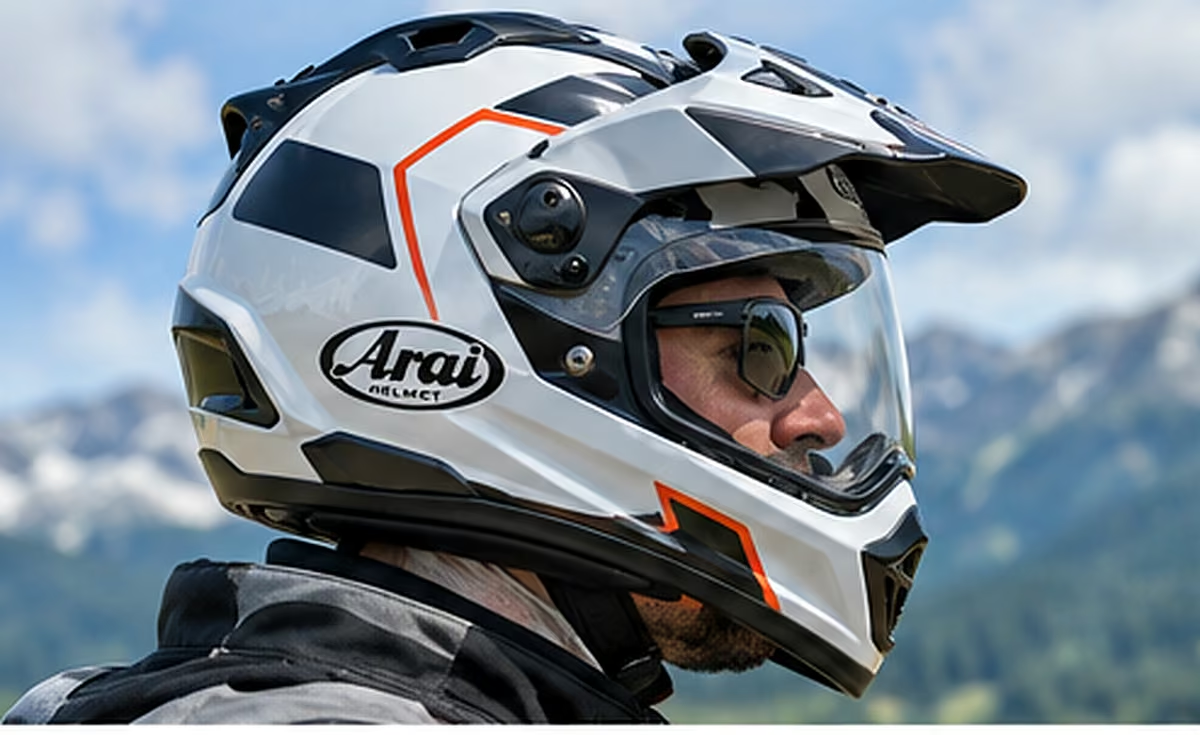
Can an Adventure Helmet Peak Increase Buffeting?
An adventure helmet peak is the projecting visor commonly fitted above the face shield on dual-sport and adventure motorcycle helmets.
Its shape can influence how aerodynamic forces act on the helmet.
Depending on incoming airflow direction, speed, and helmet design, the peak may contribute to additional lifting, rotational loading, or vibration.
However, not all adventure peaks create noticeable buffeting.
Some manufacturers design helmets with configurable peaks and visors for different riding environments.
For example, Arai’s XD-5 supports multiple manufacturer-defined configurations, including street use without the peak and configurations incorporating the peak. [19]
If a rider suspects the peak is contributing to discomfort, compare only the configurations explicitly supported by the helmet manufacturer.
Do not cut, drill, reshape, or remove permanently attached safety components in an attempt to improve aerodynamics.
How a Helmet Neck Seal Affects Wind Noise
A helmet neck seal refers to the sealing arrangement around the lower helmet opening, including the fit of the neck roll and compatible protective accessories.
Air entering around this opening can influence noise transmitted to the rider’s ears.
Wind-tunnel research reported by ISVR Consulting found that improving sealing around the lower helmet opening could reduce noise in some windshield and helmet configurations. [2]
However, reducing wind noise is not the same as eliminating aerodynamic buffeting.
A neck seal may make the riding environment quieter while leaving the helmet’s external pressure fluctuations largely unchanged.
Use only manufacturer-approved chin curtains, neck rolls, or similar components.
These accessories should not interfere with breathing, helmet retention, emergency removal, or the helmet’s intended ventilation arrangement.
Wind Noise Reduction vs. Buffeting Reduction
Wind noise reduction focuses on decreasing sound exposure, while buffeting reduction focuses on minimizing uncomfortable fluctuating aerodynamic forces.
These objectives overlap but are not identical.
A helmet can experience substantial airflow noise while remaining aerodynamically stable.
Conversely, a rider may experience strong helmet movement even when the helmet does not seem exceptionally loud.
Research published in the Journal of the Acoustical Society of America examined motorcycle helmet noise under both road and wind-tunnel conditions, demonstrating the complexity of aerodynamic and mechanical noise sources. [20]
Appropriate motorcycle hearing protection is important regardless of windshield configuration.
The Motorcycle Safety Foundation recommends suitable earplugs to reduce exposure to engine and wind noise. [21]
Evaluate aerodynamic comfort and acoustic comfort separately rather than assuming a quieter setup is automatically more stable.
How to Test Motorcycle Windshield Buffeting Solutions
Finding a comfortable windshield setup requires controlled comparisons rather than random accessory changes.
Wind conditions, speed, rider posture, and helmet position can all influence the outcome.
If several variables change simultaneously, it becomes difficult to identify why a particular configuration feels better or worse.
A structured testing process helps riders distinguish repeatable improvements from temporary changes caused by weather or riding conditions.
All adjustments must be completed while safely stopped, unless the motorcycle manufacturer explicitly provides controls designed for adjustment during operation.
Windshield A/B Road Testing: A Repeatable Troubleshooting Method
Windshield A/B road testing involves comparing two windshield configurations under reasonably similar conditions.
Configuration A is the baseline, while configuration B contains one controlled change.
For example, a rider may compare the original windshield position with the next approved height setting.
Keep the same helmet, riding posture, luggage arrangement, and general route whenever possible.
Avoid deliberately changing speed outside normal, safe, and legal riding conditions.
A simple testing log can help:
| Test variable | Baseline A | Configuration B |
|---|---|---|
| Windshield height | Original setting | One approved increment higher |
| Windshield angle | Original setting | Unchanged |
| Helmet | Same helmet | Same helmet |
| Road conditions | Dry, calm where possible | Comparable |
| Helmet shaking | Rider-rated 0 to 5 | Rider-rated 0 to 5 |
| Wind noise | Rider-rated 0 to 5 | Rider-rated 0 to 5 |
| Chest pressure | Rider-rated 0 to 5 | Rider-rated 0 to 5 |
| Visibility | Acceptable or unacceptable | Acceptable or unacceptable |
The numerical ratings are subjective comparison tools, not validated aerodynamic measurements.
Repeat promising configurations because changes in ambient wind can influence a single test.
Recommended Testing Sequence
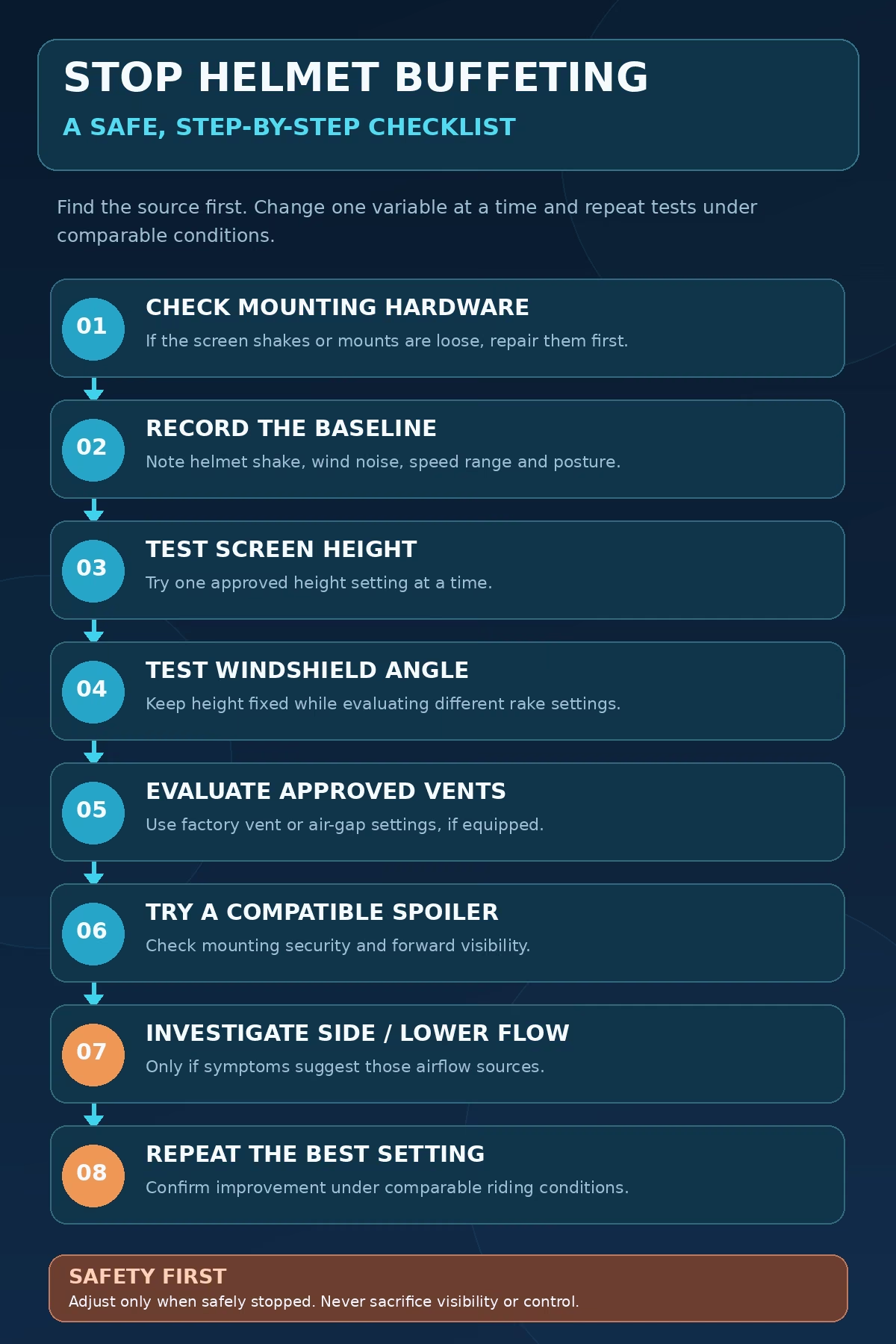
A useful troubleshooting sequence begins with mechanical safety, proceeds through existing adjustments, and considers aftermarket accessories only when simpler changes fail.
The process should remain reversible wherever possible.
Riders should maintain their normal seating position, wear the same protective equipment, and avoid intentionally creating dangerous wind exposure.
The following order helps isolate likely causes:
- Inspect windshield mounting hardware and screen condition.
- Record the original configuration and establish a baseline.
- Test approved windshield height settings.
- Return to the best height and test permitted angle settings.
- Evaluate manufacturer-designed vent or air-gap configurations.
- Test a compatible upper spoiler or windshield extension.
- Investigate side winglets or lower deflectors if symptoms remain.
- Repeat the most promising configuration under comparable conditions.
Stop testing any setup that compromises visibility, steering clearance, mounting security, or comfortable control of the motorcycle.
Airflow Visualization: Finding the Source of Turbulence
Airflow visualization involves observing how air moves around a surface or through a particular region.
Aerodynamic engineers commonly use techniques such as tuft testing, smoke visualization, and particle-based measurement systems.
Tuft testing uses small lightweight indicators attached to a surface to reveal local airflow direction and changes.
Smoke or other flow tracers can make larger airflow patterns visible in controlled environments.
However, these techniques require appropriate equipment and safety controls.
Riders should not attach loose ribbons, smoke devices, or improvised measuring equipment that could interfere with visibility, steering, brakes, or nearby traffic.
For most motorcycle owners, repeatable adjustments provide more practical information than attempting complex airflow visualization on public roads.
Professional aerodynamic testing becomes relevant when diagnosing unusual or persistent problems involving custom fairings or specialized motorcycle designs.
Wind Tunnel Testing and Motorcycle Windshield Design
Wind tunnel testing allows engineers to evaluate airflow around a motorcycle under controlled conditions.
A motorcycle and rider model can be exposed to defined airflow speeds and directions while researchers measure aerodynamic forces or investigate local flow structures.
Testing may involve pressure sensors, force balances, flow visualization, or Particle Image Velocimetry, commonly abbreviated as PIV.
A 2021 study in the Journal of Wind Engineering and Industrial Aerodynamics investigated different motorcycle windshield configurations and rider positions using force measurements and PIV. Its findings included differences in wake structure and velocity fluctuations between configurations. [1]
Wind-tunnel research can identify relationships that are difficult to measure during ordinary road riding.
However, controlled experiments may not fully reproduce real-world crosswinds, moving traffic, changing rider posture, and uneven road conditions.
Physical road validation remains important when evaluating practical comfort.
Computational Fluid Dynamics (CFD) for Windshield Optimization
Computational Fluid Dynamics (CFD) uses numerical methods to estimate airflow, pressure distributions, and aerodynamic forces around objects.
Engineers can model motorcycle geometry, rider position, and different windshield shapes to investigate how air travels through the surrounding region.
CFD software such as ANSYS Fluent and Siemens Simcenter STAR-CCM+ supports aerodynamic analysis.
Simulation approaches differ in their ability to capture transient turbulence and separation structures.
Siemens describes both steady-state Reynolds-Averaged Navier-Stokes methods and more computationally demanding unsteady simulations for vehicle aerodynamics. [22]
A 2024 study of Honda CB500X windshield designs used CFD to compare drag and pressure-related behavior across different configurations. [23]
Nevertheless, CFD predictions depend on geometry, mesh quality, boundary conditions, turbulence modeling, and validation.
A simulated reduction in drag or improved pressure distribution does not automatically establish improved helmet comfort for every rider.
Which Motorcycle Windshield Buffeting Solution Should You Try First?
The most practical solution depends on the main symptom and the likely location of the airflow disturbance.
Helmet shaking, excessive chest pressure, lateral turbulence, and physical windshield vibration suggest different starting points.
Rather than purchasing several accessories simultaneously, identify the dominant problem and begin with the least invasive, safest adjustment.
Existing factory settings and properly maintained mounting hardware should generally be investigated before major changes to the windshield system.
Troubleshooting Based on the Main Symptom
A symptom-based diagnosis helps narrow the list of possible causes.
However, similar sensations can arise from different aerodynamic interactions, so the relationships below should be considered starting hypotheses rather than confirmed diagnoses.
For example, helmet shaking may originate at the windshield’s upper edge, around the side fairings, or from the helmet’s interaction with direct airflow.
| Rider symptom | Possible cause to investigate | Initial solution to test |
|---|---|---|
| Helmet shakes behind the windshield | Helmet positioned near the turbulent wake boundary | Windshield height or angle adjustment |
| Buffeting remains despite a tall screen | Unfavorable wake structure or pressure distribution | Approved venting, screen angle, or air-gap arrangement |
| Strong wind strikes the chest and shoulders | Insufficient wind coverage | Taller screen or compatible extension |
| Turbulence reaches the sides of the helmet | Side-edge separation or lateral airflow | Screen contour, width, or side winglets |
| Strong airflow appears to rise around the fuel tank | Lower-front airflow interacting with the rider | Motorcycle-specific lower or fork deflectors |
| Helmet movement seems related to an adventure peak | Peak interaction with incoming airflow | Manufacturer-approved helmet configuration |
| Windshield visibly shakes | Loose mounts or excessive bracket movement | Inspect and repair mounting hardware |
| Passenger experiences strong buffeting | Passenger positioned within disturbed rider wake | Evaluate passenger geometry and windshield setup |
Use this table to prioritize investigation rather than automatically purchasing the suggested component.
Best Solutions for Different Motorcycle Categories
Motorcycle categories differ in riding posture, windshield size, fairing construction, and typical wind exposure.
Consequently, the same buffeting solution may provide different results on a cruiser, adventure motorcycle, or fully faired touring machine.
A useful approach is to begin with adjustments that suit the motorcycle’s existing design.
Then consider accessories that specifically address the remaining airflow problem while preserving steering clearance and suitable wind protection.
Touring Motorcycles
Touring motorcycles typically prioritize sustained riding comfort and weather protection.
Their relatively large fairings and windscreens can provide excellent shelter, but individual rider height and passenger positioning may influence the resulting wake.
Useful options include adjustable touring windscreens, manufacturer-designed fairing vents, recurve profiles, and secondary upper blades.
On motorcycles equipped with electrically adjustable windscreens, the factory adjustment range should be evaluated before replacing parts.
Passenger feedback is particularly important because a modification that improves the rider’s helmet comfort may change airflow around the pillion.
Maintain safe forward visibility and consider how the preferred configuration behaves in rain and crosswinds.
Adventure Motorcycles
Adventure motorcycles commonly combine upright riding positions, relatively narrow windscreens, handguards, and helmets with pronounced external features.
These elements create a distinctive airflow environment.
Start by evaluating factory windshield positions and the rider’s normal seated posture.
A compatible adjustable extension may help when the main windshield directs its wake toward the helmet.
If an adventure helmet has a removable peak, compare only manufacturer-approved configurations.
Lower airflow around the tank and fairing can also be worth investigating when symptoms suggest that the disturbance originates below the main windshield.
Avoid modifications that compromise off-road steering clearance, standing-riding ergonomics, or handlebar movement.
Cruisers
Cruisers may use detachable windscreens, fork-mounted screens, or large touring-style fairings.
Their upright seating positions can leave the rider exposed to substantial upper-body wind.
Some cruiser riders prefer relatively short screens that protect the chest while leaving the helmet in more direct airflow.
Others benefit from taller touring windshields that provide greater weather protection.
Windshield height, mounting angle, and distance from the rider should be evaluated together.
Large screens also deserve careful consideration during crosswinds, particularly when attached to steering components.
The most comfortable option depends on rider proportions, normal travel speeds, and the intended balance between protection and direct airflow.
Commuter and Sport-Touring Motorcycles
Commuter and sport-touring motorcycles often require a balance between highway comfort, manageable screen size, and practical visibility.
A short factory screen may provide adequate protection at lower speeds but expose the rider to significant wind during sustained travel.
A taller replacement can improve coverage, although it may also introduce a turbulent wake near the helmet.
Begin with any available factory height adjustments.
If the screen is fixed, consider a compatible extension or a replacement with a carefully chosen upper-edge profile.
For sport-touring motorcycles, evaluate the windshield while maintaining the normal forward-leaning posture rather than adopting an unnatural position solely to avoid turbulence.
Choosing Between Adjustment, Accessories, and Replacement
Choosing the appropriate intervention involves balancing likely aerodynamic benefits against cost, complexity, reversibility, and safety.
Start with adjustments that do not require purchasing additional equipment.
If the existing screen cannot redirect airflow appropriately, an adjustable spoiler may provide greater flexibility.
A complete replacement becomes more reasonable when the original windshield’s size, width, or overall profile is unsuitable.
| Solution | Best reason to consider it | Main limitation |
|---|---|---|
| Height adjustment | Existing screen wake reaches the helmet | Limited factory adjustment range |
| Angle adjustment | Outgoing airflow direction appears unfavorable | Requires compatible adjustment mechanism |
| Approved venting | Rear airflow and wake behavior appear problematic | Motorcycle-specific effectiveness |
| Clip-on spoiler | Additional upper-edge deflection is needed | Clamp compatibility and added loading |
| Recurve windshield | Different airflow trajectory is desired | Effectiveness varies by motorcycle |
| Wider windshield | Greater shoulder and upper-body protection is needed | May alter lateral turbulence |
| Lower wind deflectors | Evidence suggests unwanted airflow from below | Limited relevance to upper-edge turbulence |
| Full replacement | Existing windshield geometry cannot meet comfort needs | Greater expense and fitment considerations |
The best purchase decision is supported by repeatable improvement, not simply by a product’s advertised wind-protection claims.
Windshield Mounting Safety and Clearance
Aerodynamic modifications must never compromise motorcycle control, forward visibility, or component security.
Even a small windshield spoiler can introduce additional loads on the screen and mounting hardware.
Incorrect installation can cause unwanted movement, cracks, or interference with steering and controls.
Safety checks are especially important when combining accessories from different manufacturers, because individually compatible parts may not always work safely together.
Follow the installation and inspection instructions for the exact motorcycle and accessory combination.
Essential Windshield Mounting Safety and Clearance Checks
Windshield mounting safety and clearance refers to the secure attachment of the windshield and adequate separation between accessories and the motorcycle’s operating components.
Before riding, inspect the mounting assembly and verify that the screen is installed according to manufacturer instructions.
Use the following checklist:
- Confirm that fasteners are correctly tightened to their specified requirements.
- Inspect brackets, clamps, rubber supports, and windshield mounting holes.
- Check for cracks or signs of stress around attachment points.
- Turn the handlebars fully in both directions while stationary.
- Confirm adequate clearance around brake hoses, cables, mirrors, and handguards.
- Check suspension-related clearance where applicable.
- Verify that the screen does not obstruct essential forward visibility.
- Ensure that add-on spoilers cannot interfere with helmet or rider movement.
- Reinspect the assembly after installation and at the intervals recommended by the manufacturer.
MadStad’s installation guidance specifically warns against adjusting its brackets while riding and emphasizes checking full steering clearance. [10]
If any accessory appears insecure or interferes with controls, correct the problem before operating the motorcycle.
Common Mistakes When Trying to Eliminate Buffeting
Several common troubleshooting mistakes can make windshield buffeting worse or introduce unnecessary safety risks.
The first is assuming that a taller windshield always produces smoother airflow.
Another is changing multiple variables simultaneously, such as installing a spoiler, raising the screen, and altering the seat position before evaluating any individual effect.
Additional mistakes include:
- Confusing ordinary wind noise with aerodynamic helmet movement.
- Ignoring visible windshield vibration or loose mounting hardware.
- Using incompatible spoiler clamps or improvised spacers.
- Testing configurations under substantially different wind conditions.
- Making unapproved alterations to windshield vents or mounting holes.
- Adjusting manually operated windshield hardware while riding.
- Overlooking passenger comfort.
- Ignoring reduced visibility through tall or heavily tinted screens.
The most reliable approach is to correct mechanical faults first, change one aerodynamic variable at a time, and retain only modifications that provide repeatable improvements.
Frequently Asked Questions About Motorcycle Windshield Buffeting
Motorcycle riders often encounter similar problems despite using different motorcycle models and windshield systems.
The questions below address the most common concerns about helmet shaking, windshield height, spoilers, vents, and riding comfort.
Because motorcycle aerodynamics depend on several interacting variables, the answers emphasize diagnostic principles rather than universal measurements.
A configuration should always be evaluated on the actual motorcycle, with the intended rider, helmet, and normal riding posture.
Why Does My Motorcycle Windshield Make My Helmet Shake?
A motorcycle windshield can make your helmet shake when its disturbed airflow reaches the helmet and creates fluctuating aerodynamic forces.
Air separating around the windshield forms a wake whose boundaries can contain substantial velocity fluctuations.
If your helmet sits within this region, the resulting aerodynamic loading may produce repeated head movement.
Changing windshield height or angle can shift the wake relative to your helmet.
However, similar symptoms may also result from crosswinds, helmet design, or other airflow sources.
Inspect the windshield mounting system before testing aerodynamic changes, particularly if the screen itself visibly vibrates.
Is a Taller or Shorter Windshield Better for Reducing Buffeting?
Neither a taller nor a shorter windshield is universally better.
A taller screen may redirect turbulent airflow above the helmet and improve weather protection.
A shorter screen may allow the helmet to sit above the windshield wake in more direct, comparatively steady airflow.
Both approaches can reduce buffeting under suitable conditions.
The correct choice depends on rider height, seating position, windshield shape, and the motorcycle’s aerodynamic geometry.
Test available height settings first and prioritize a configuration that provides acceptable helmet stability without compromising forward visibility.
Does Adjusting Motorcycle Windshield Angle Help With Buffeting?
Yes, windshield angle adjustment can help reduce buffeting by changing how air travels over and separates from the screen.
A different rake angle may shift the disturbed wake relative to the rider’s helmet.
However, the outcome depends on the motorcycle and windshield configuration.
There is no single angle that works best for all riders.
Use only permitted adjustment settings, keep windshield height unchanged when comparing angles, and secure the mounting hardware before riding.
Small, controlled changes are generally more informative than making a large adjustment without recording the original position.
Can a Windshield Spoiler Eliminate Helmet Buffeting?
A properly positioned windshield spoiler may significantly reduce helmet buffeting on some motorcycles.
The secondary blade changes the airflow leaving the main screen and can shift disturbed air away from the helmet.
Adjustable spoilers provide additional flexibility because their height and inclination can be changed.
However, spoilers are not guaranteed to eliminate turbulence.
A spoiler may have limited value when buffeting originates from lower fairing airflow or side-edge disturbances.
Compatibility, attachment security, visibility, and manufacturer instructions should determine whether an extension is suitable.
The goal is a measurable improvement in comfort, not simply increased windshield height.
Do Windshield Vents Reduce Turbulence?
Windshield vents can reduce certain forms of turbulence by allowing additional airflow into the region behind the windshield.
This changes local airflow and pressure distribution, potentially modifying the wake experienced by the rider.
Harley-Davidson’s documented Splitstream vent design provides an example of a manufacturer-engineered system intended to improve aerodynamic comfort.
However, not every vent arrangement produces the same result.
Vent location, opening size, windshield shape, and fairing design all influence effectiveness.
Use existing manufacturer-approved vent settings rather than cutting or drilling openings into a windshield without engineering guidance.
Why Is My Motorcycle Windshield Buffeting Worse at Highway Speeds?
Windshield buffeting often becomes more noticeable at highway speeds because aerodynamic loading generally increases with relative airflow speed.
Dynamic pressure depends on the square of airflow velocity, meaning that higher speeds can produce substantially greater aerodynamic forces.
However, the severity of helmet buffeting also depends on the structure of the wake and how its fluctuations interact with the helmet.
Some configurations may produce especially noticeable disturbances within particular speed ranges.
If symptoms become severe, reduce speed safely and reassess the setup.
Do not deliberately ride faster to investigate whether the turbulence disappears.
Can a Motorcycle Helmet Cause Wind Buffeting?
A motorcycle helmet can contribute to the severity of perceived buffeting because its shape, fit, and external components influence aerodynamic loading.
Features such as pronounced peaks, external vents, and spoilers may behave differently depending on the direction of incoming airflow.
A helmet may feel stable in direct airflow but less comfortable within a windshield-generated wake.
However, the helmet should not automatically be blamed.
Investigate windshield geometry and rider position first, then consider whether the helmet’s fit or manufacturer-approved configuration affects the result.
Never compromise helmet safety or retention to improve aerodynamic comfort.
Why Does My Motorcycle Have Less Buffeting Without a Windshield?
Removing a windshield eliminates the wake generated by that particular screen.
As a result, the helmet may receive more direct incoming airflow instead of the fluctuating flow associated with the windshield’s upper edge.
For some riders, this produces less helmet shaking.
However, removing the screen also increases exposure to direct wind pressure, rain, insects, cold air, and road debris.
The resulting ride may feel smoother around the helmet but more tiring overall.
A lower windshield or redesigned screen may offer a useful compromise between relatively steady helmet airflow and upper-body protection.
Any comparison should be performed safely and only where the motorcycle is approved for operation without the windshield.
Do Motorcycle Fork Deflectors Reduce Helmet Buffeting?
Fork-mounted wind deflectors may help when airflow originating around the lower front of the motorcycle contributes to the disturbance reaching the rider.
They are less likely to solve buffeting caused primarily by turbulent airflow leaving the windshield’s upper edge.
Their effectiveness depends on the fairing layout, fork geometry, rider position, and existing windshield configuration.
There is insufficient basis for treating fork deflectors as a universal helmet buffeting solution.
Before purchasing them, investigate whether the symptoms suggest significant lower-front airflow.
Use compatible components and verify steering, braking, and suspension clearance during installation.
Can Windshield Buffeting Be Completely Eliminated?
Windshield buffeting can sometimes be reduced to a level that is barely noticeable during normal riding.
However, completely eliminating every aerodynamic fluctuation is not a realistic guarantee.
Motorcycles operate in changing environments involving crosswinds, vehicle wakes, road conditions, and different rider postures.
Even a well-designed windshield cannot control all surrounding airflow.
The practical goal is to reduce uncomfortable helmet movement while maintaining adequate wind protection, safe visibility, and predictable motorcycle handling.
A successful setup should perform consistently across typical riding conditions rather than feeling comfortable only during one particular test.
Conclusion: Finding the Right Motorcycle Windshield Buffeting Solution
Motorcycle windshield buffeting is an aerodynamic problem influenced by windshield geometry, airflow separation, pressure fluctuations, rider position, motorcycle design, and helmet characteristics.
A screen that provides excellent chest protection may still produce an uncomfortable wake around the helmet. Similarly, a shorter windshield may reduce shaking while increasing direct wind exposure.
The most effective approach is to identify the source of the disturbance before replacing components.
Start by inspecting the windshield and its mounting hardware. Once mechanical problems have been ruled out, test available height and angle adjustments under comparable conditions.
If the original screen cannot provide comfortable airflow, consider manufacturer-approved venting, adjustable spoilers, recurve profiles, or compatible replacement windshields.
Side winglets and lower deflectors may be useful when the symptoms indicate airflow problems outside the windshield’s upper-edge wake.
Throughout the process, prioritize secure mounting, steering clearance, forward visibility, and helmet safety.
Ultimately, the best motorcycle windshield buffeting solution is not the largest screen or the most elaborate accessory. It is the carefully tested configuration that delivers comfortable helmet airflow, adequate wind and weather protection, and predictable motorcycle handling.
Sources
The following references include peer-reviewed aerodynamic research, technical guidance from recognized institutions, motorcycle safety resources, and manufacturer documentation. Manufacturer product descriptions explain intended design functions but should not be interpreted as universal proof of effectiveness.
[1] Capone, A., and Romano, G. P. (2021). Effect of windshield configuration and pilot position on motorcycle performances. Journal of Wind Engineering and Industrial Aerodynamics, 218, 104753.
[2] ISVR Consulting, University of Southampton. Noise Levels Under Motorcycle Helmets.
[3] Scappaticci, L., et al. (2021). An Approach to the Definition of the Aerodynamic Comfort of Motorcycle Helmets. Vehicles, 3(3), 545–556.
[4] NASA Glenn Research Center. Boundary Layer.
[5] NASA Glenn Research Center. Momentum Effects and Dynamic Pressure.
[6] Fintelman, D., Hemida, H., Sterling, M., and Li, F.-X. (2015). A Numerical Investigation of the Flow Around a Motorbike When Subjected to Crosswinds. Engineering Applications of Computational Fluid Mechanics, 9(1), 528–542.
[7] Do, V. A., Katsuchi, H., and Wang, J. (2026). Investigating the Effect of Crosswind on the Aerodynamic Stability of Motorcycle. Journal of Structural Engineering, A, 72A, 315–325.
[8] Motorcycle Safety Foundation. Ask the MSF: The Benefits of Windscreens. American Motorcyclist.
[9] National Cycle. Windshield Bible: Get the Right Height.
[10] MadStad Engineering. MadStad RoboBracket Adjustable Windshield System Instructions.
[11] Klock Werks. Flare Windshield Design and Sizing Information.
[12] Harley-Davidson. Owner Guidance: Fairing Splitstream Vent Operation.
[13] Puig Hi-Tech Parts. Multi-Adjustable Visor 2.0 Clip-On.
[14] POLO Motorrad. MRA X-Creen Adjustable Windshield Product Information.
[15] GIVI. AIRFLOW Adjustable Windscreen System.
[16] Harley-Davidson. Adjustable Air Deflectors: Operation and Rider Comfort.
[17] Harley-Davidson. Road Glide vs. Street Glide Comparison.
[18] Honda Powersports. 2026 Gold Wing Tour Features.
[19] Arai Helmets. XD-5 Specifications and Features.
[20] Kennedy, J., Carley, M., Walker, I., and Holt, N. (2013). On-Road and Wind-Tunnel Measurement of Motorcycle Helmet Noise. Journal of the Acoustical Society of America, 134(3), 2004–2010.
[21] Motorcycle Safety Foundation. Personal Protective Gear for the Motorcyclist.
[22] Siemens Digital Industries Software. Vehicle Aerodynamics CFD Simulation in Simcenter STAR-CCM+.
[23] Ghazali, F., and Abdul Ghafir, M. F. (2024). Investigation of Different Windshield Designs for Aerodynamic Drag Force in Motorcycle. Progress in Aerospace and Aviation Technology, 4(1), 49–56.